




Does anti-mould paint really work? Here is what people overlook

Fancy a mystery offer? Unlock yours →
You’ve got mould on your walls that you are trying to get rid of it once and for all. Anti-mould paint seems like the obvious answer, but you want to know whether it’ll actually stop the mould from coming back before spending your hard earned money.
The good news is that anti-mould paint can work, but not all paints tackle mould in the same way and even those designed to do the same job can perform very differently.
So, before you pick up a tin, let’s take a closer look at what really makes the difference.
Here’s what we’ll cover:
Before we get into the details on how the various anti-mould paints work, we need to look at what’s actually causing the mould in the first place.
Well, mould ultimately needs moisture to grow and our homes give it plenty of opportunities to find some.
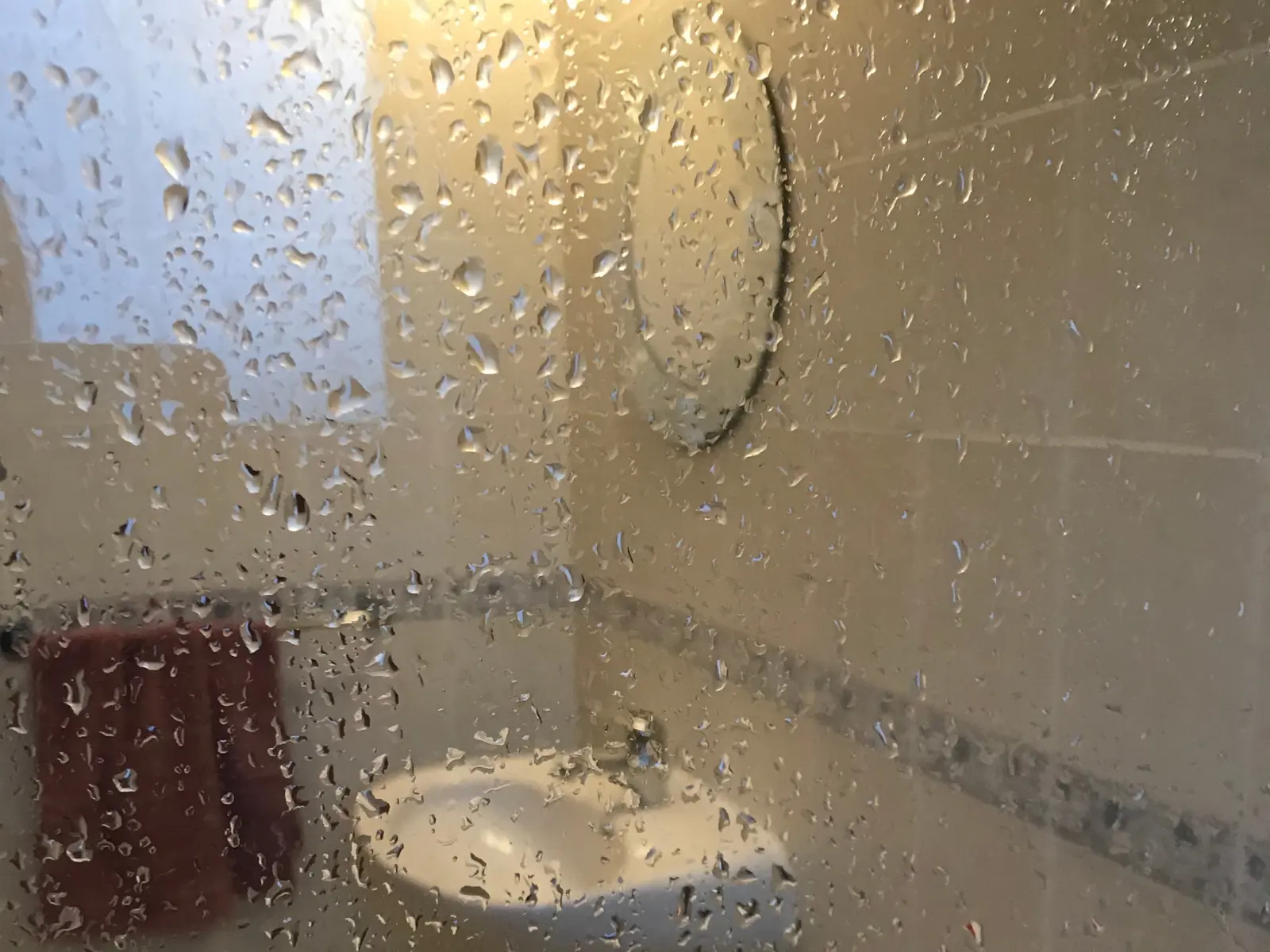
Think about a bedroom with a cold outside wall, a wardrobe pushed up against it and a window that rarely gets opened in winter. Once the moisture we create just by going about our day is added, you’ve got several things working together to make a nice home for mould.
That’s the tricky bit about mould and why it’s estimated that as many as 6.5 million homes in the UK suffer from damp and mould.¹
It’s rarely just one thing causing it and for most people it’s about managing a number of factors to reduce the overall risk.
So, what are those factors?

The important thing to know is that these factors don’t always work in isolation. You might improve ventilation, but still have a cold wall where condensation can form, or you might deal with a leak only to find another source of moisture causing problems.
Whatever combination of factors is causing the problem, one thing remains the same and that’s mould needs moisture to grow.
Want to dive in a bit more? We’ve covered all of this in more detail in our guide to what causes mould on interior walls.
Heroes Fact
Unlike a standard paint, these are specifically designed to help prevent mould growing on your walls.
Most contain ingredients called biocides, which inhibit the growth of mould on the surface of the paint. Essentially, they make the painted wall a less welcoming place for mould to grow, even when there’s moisture present.
But remember all of those factors we talked about earlier? The conditions that lead to mould haven’t really changed, so the wall can still be cold, condensation can still form and moisture can still build up.
So, while the paint is helping prevent mould from growing, it’s not necessarily doing anything about the moisture that’s encouraging it in the first place.
The protection also relies on the biocides being present and effective on the surface of the wall, so many of these paints can’t be painted over, which can limit your flexibility as a homeowner.
THE HEROES TECHNICAL TEAM
Now, you might have also come across paints labelled as anti-condensation paint rather than anti-mould paint. A bit confusing isn’t it?
Well, the paint industry does love making things sound more complicated than they need to be.
The truth is, anti-condensation paints are another way of helping tackle mould, but they approach the problem a bit differently.
Rather than relying on biocides to try and fight off mould, they’re designed to reduce or manage the condensation on your walls.
There are a few different types, including paints that absorb moisture temporarily, but the one particularly useful for cold, mouldy walls is thermal anti-condensation paint.
These use a specialist technology, often including tiny particles called microspheres, designed to help the painted wall retain warmth and reduce the amount of condensation forming on it.
If we think back to that cold bedroom wall, you can open the windows, improve ventilation and do your best to keep moisture levels down, but that doesn’t necessarily stop a cold wall from attracting condensation.
That’s where thermal anti-condensation paint can lend a hand by reducing the moisture forming on the wall itself, it’s tackling one of the things mould simply can’t grow without.
So, we’ve covered why mould can keep coming back and the different options on the table for you and your home, but there’s something we haven’t covered yet and that’s how effective different paints are.
One thing I’ve always found interesting about anti-mould paints is how much attention goes into stopping mould growing, when so much of the advice about preventing it comes back to managing moisture.
It seems like a bit of a contradiction, doesn’t it?
In fact, UK Government guidance identifies condensation as one of the most common causes of damp and mould in homes.³

That’s something we kept coming back to when we were developing our own paint. We wanted to create a longer-term way of tackling mould, rather than just focusing on stopping it growing on the surface.
Our whole thinking is about creating healthier homes, so relying heavily on biocides didn’t feel like the right starting point, particularly when they don’t necessarily do anything about the condensation that encourages mould in the first place.
Instead, we wanted to see how much of a difference we could make by focusing on reducing that moisture, while keeping the use of biocides to a minimum.
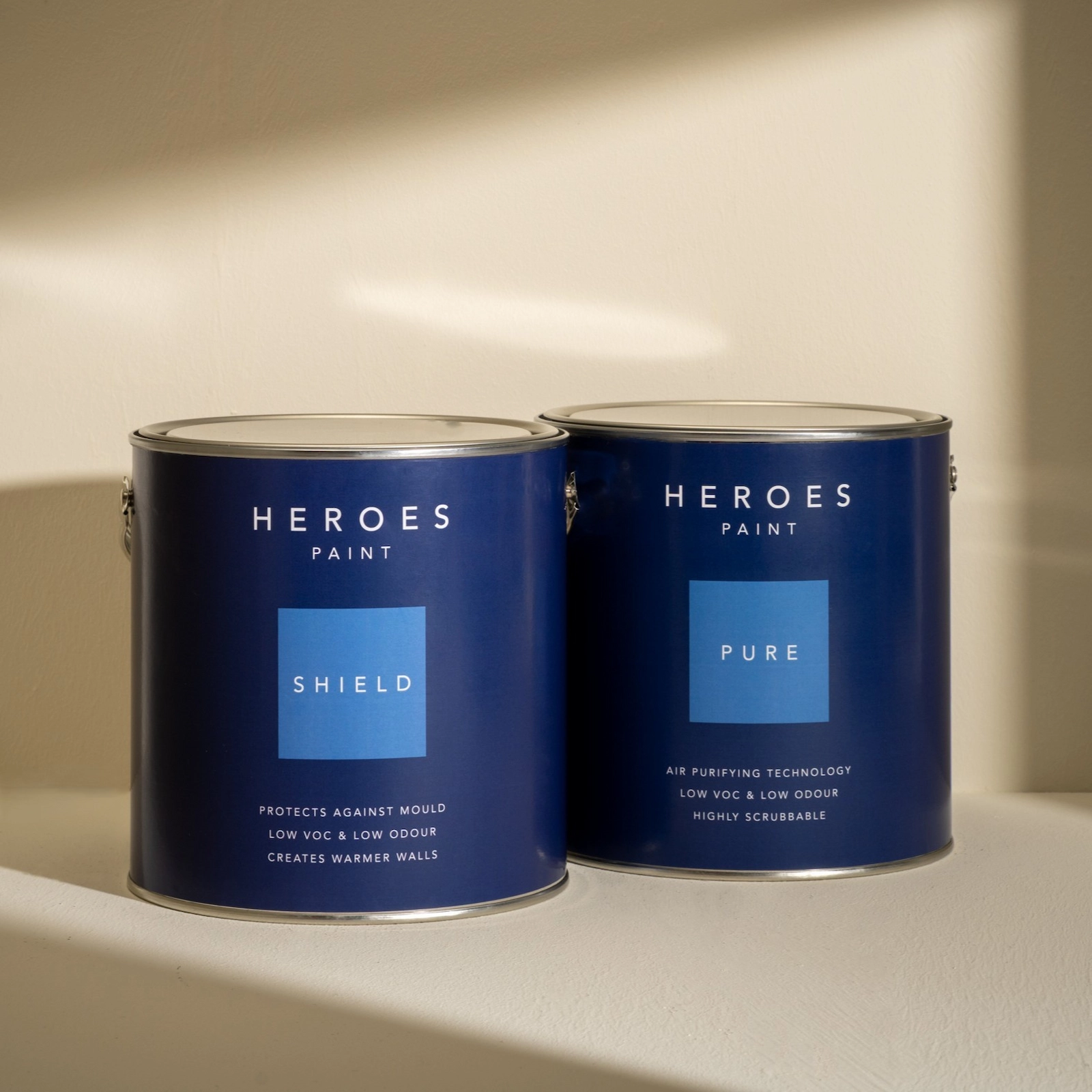
That thinking led us to develop our own anti-mould paint, Heroes Shield.


But of course, we weren’t the first to think about reducing condensation, but traditional anti-mould paints and thermal anti-condensation paints that all promise to do just that already.
If two paints are designed to reduce condensation, how much difference can there really be between them?
Rather than taking the claims on the tin at face value, we commissioned independent testing to see what happened when four different paints were put through the same conditions.
We wanted to get a fair comparison, so we tested four different paints covering the approaches we’ve talked about.
That meant comparing:
We deliberately included both traditional anti-mould and thermal anti-condensation paints because they tackle the problem in different ways.
That gave us a chance to compare not just individual products, but whether the approach a paint takes makes a measurable difference to condensation.
Let’s start with condensation, because as we’ve talked about, moisture forming on your walls is an essential part of what leads to mould growing.
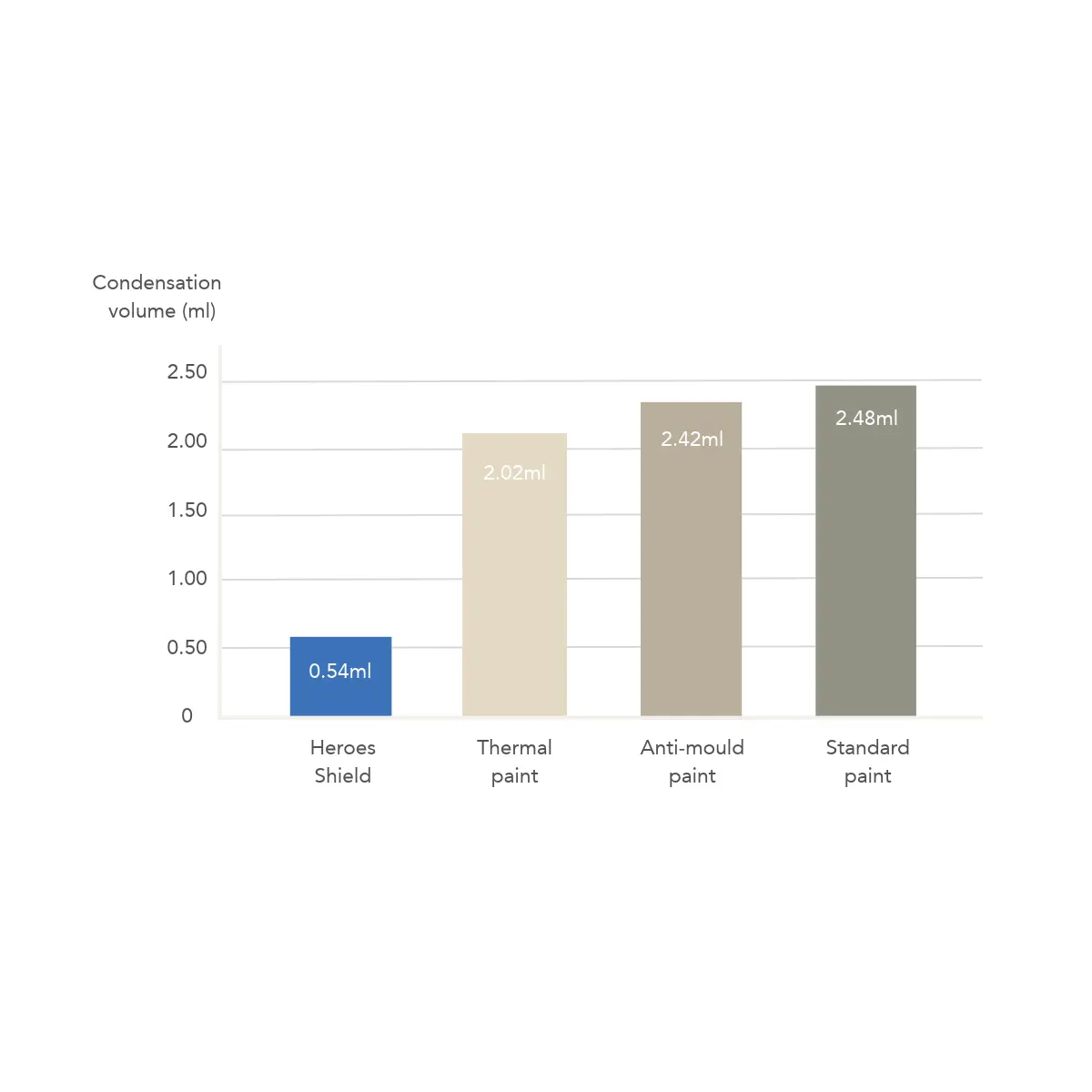
For this test, the independent lab applied the four paints to steel panels and placed them in a controlled high humidity environment for 12 hours.
As condensation formed, the water was collected and measured to see how effectively each paint reduced condensation formation.
Quite a big one, actually.
The traditional anti-mould paint produced almost as much condensation as standard emulsion, meaning although it’s designed to resist mould growth, it wasn’t particularly effective at reducing condensation.
The thermal anti-condensation paint performed better, but a bit more interestingly, there was a substantial difference between the two thermal anti-condensation paints, despite both being designed to tackle the same problem.
What surprised us wasn’t simply that the different types of paint performed differently, it was the size of the gap between them, especially between Heroes Shield and the other thermal anti-condensation paint, which are both designed to tackle condensation in a similar way.
Remember, those cold spots we talked about earlier? They’re an important part of why condensation forms, as the colder the wall gets the easier moisture in the air can condense on it.
So, the next part of the test investigated how the four paints behaved when heated.
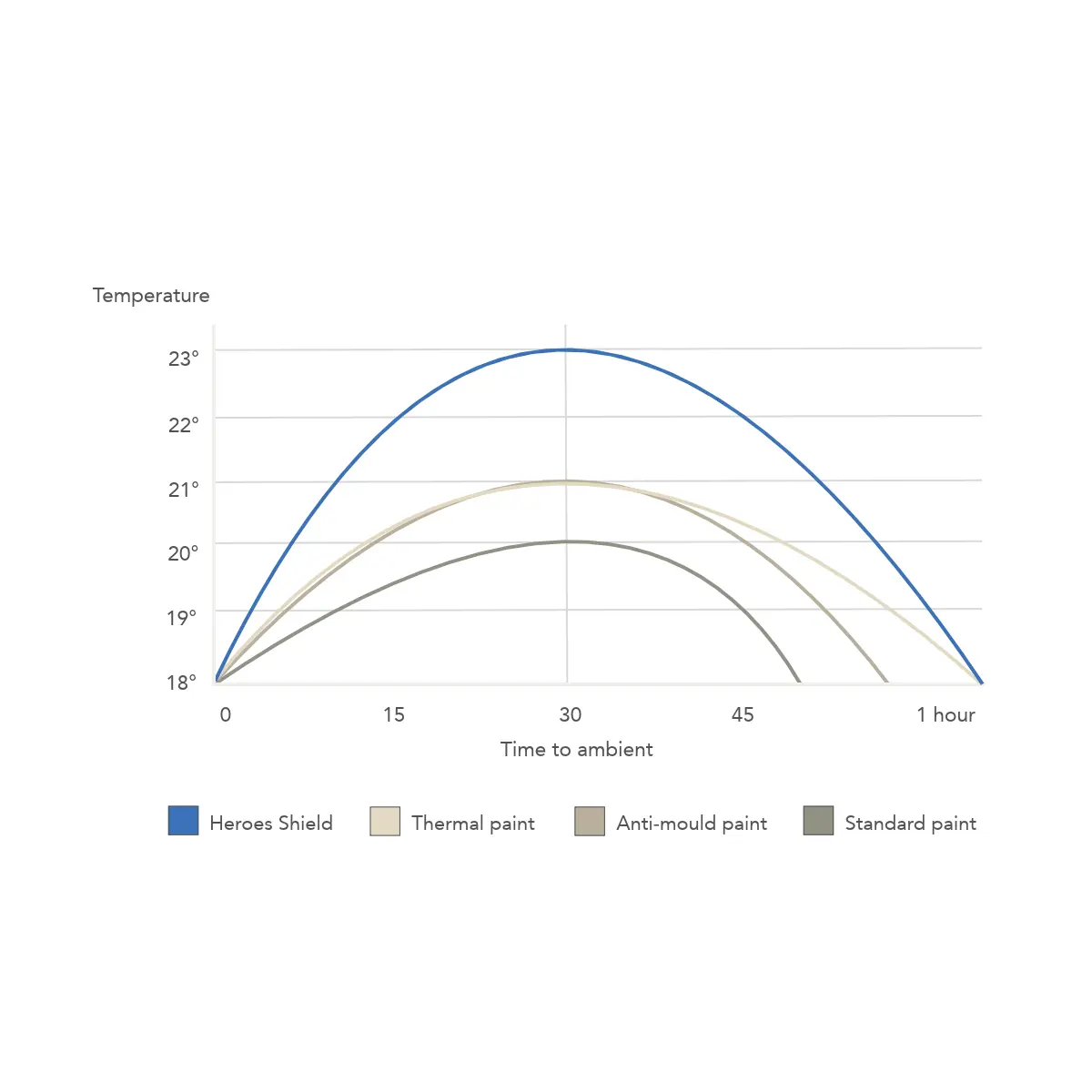
A plasterboard panel that was painted with each paint was given the same 10-minute burst of heat, then its temperature was monitored as it cooled.
Standard emulsion cooled the quickest, while the specialist paints generally held onto warmth for longer. Heroes Shield reached the highest surface temperature, measuring 3°C warmer than standard emulsion after 30 minutes.
Why does that matter for mould? A warmer surface is less likely to reach the point where moisture in the air forms condensation, so how a paint responds to heat can make a difference to the conditions on your walls.
Independent testing carried out by Analysis Scientific Ltd, March 2026, under controlled laboratory conditions. Results relate to the specific paints and test conditions used.
Well, hopefully by now you can see that anti-mould paint can work, but there’s quite a bit more to it than simply picking up a tin with anti-mould written on it.
As we know, mould needs moisture to grow and when condensation is forming on your walls, you’re giving it exactly what it needs.
That’s why we think condensation performance deserves far more attention when choosing an anti-mould paint.
Now, the important thing to remember with our testing is that we weren’t measuring how much mould grew on each paint. We were measuring how well each paint managed condensation because reducing the moisture available on a wall means tackling one of the conditions mould needs to grow.
So, when you’re choosing an anti-mould paint, there are a few things to think about:
One last thing before you get the roller out. If there’s mould already on your walls, don’t just paint straight over it. You need to safely remove the mould from the wall properly before applying your chosen paint.
Of course, choosing the right paint is only part of keeping mould at bay. There are a few everyday things you can do to help manage moisture in your home too.
Hopefully, this has helped you understand a little bit more about how anti-mould paints work and what to look for when choosing one.
If you’re still unsure, we’ve got a friendly technical team here at Heroes who know a thing or two about mould and paint and are always happy to chat through your particular situation and help you work out the best way forward.
Give us a call on 01254 936151 or drop us an email at [email protected] and we’ll be happy to help.
Let's do it

£30.00
Traditional anti-mould paints focus on fighting mould growth. Shield goes a step further, helping reduce the condensation that allows mould to grow in the first place, so you beat mould and enjoy a healthier home without the worry of it coming back.
Find out more
£10.00
Heroes Mould Remover is a mould and mildew cleaner for preparing interior walls before decorating. Use it on areas affected by mould, mildew and staining to clean the surface before applying paint.
Find out more